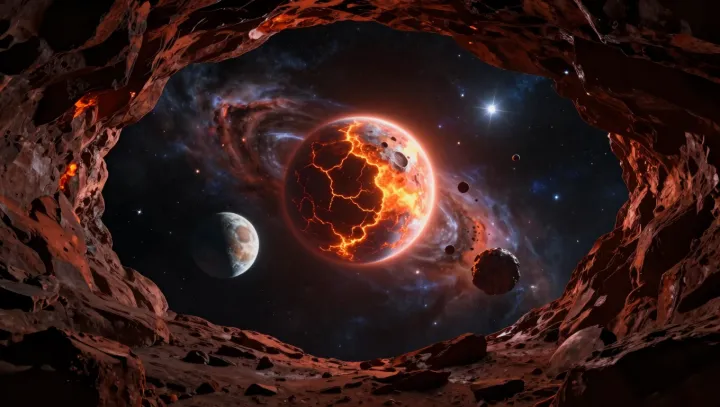
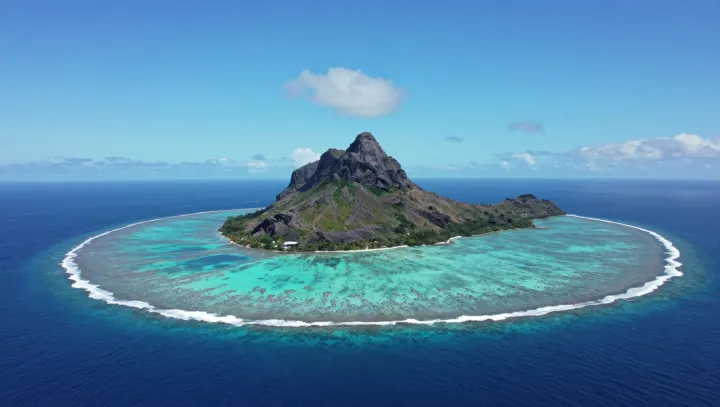
Violence, not peace, is the real architect of a tranquil lagoon. An oceanic volcano erupts, piles basalt and ash into a raw cone, then leaves gravity, seawater, and chemistry to finish the job. Waves claw at the new rock. Rain fractures it. Hydrothermal fluids react with glassy lava, altering it into weaker minerals that crumble into sand and mud.
Counterintuitively, the same reef that once broke lava now softens waves into near silence. As the cone cools, coral larvae settle on its submerged flanks, building a fringing reef that slowly grows into a near-continuous barrier. Wave energy is dissipated by friction, turbulence, and wave breaking across this rough, porous wall, described in coastal hydrodynamics as a sharp drop in significant wave height landward of the crest.
Calm water, in turn, is a ruthless filter for clarity. In the lagoon, reduced shear stress on the seafloor keeps fine particles from resuspending, while the reef community itself acts as a biological treatment plant. Filter feeders remove plankton; seagrass and algae strip nutrients; carbonate sediment with high albedo reflects light instead of swallowing it. What began as a blast furnace of magma and steam ends as a bowl of turquoise glass, engineered by erosion, biogenic calcification, and the quiet persistence of wave physics.