
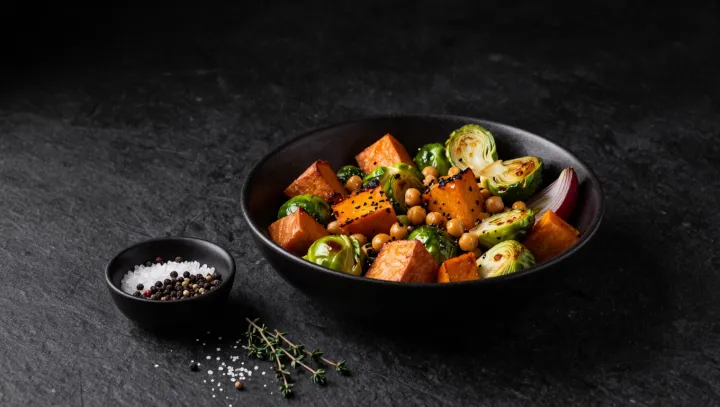
That lighter bowl is playing a heavier game. A heap of roasted carrots, broccoli and chickpeas takes up more space in the stomach while delivering fewer calories per gram, a property nutrition scientists label low energy density. Pasta, especially the refined kind, packs starch tightly; volume looks similar on the plate, but the caloric payload is far higher and the physical bulk far lower once chewed and swallowed.
The real advantage sits in fiber and protein. Chickpeas bring both, and roasted vegetables add viscous soluble fiber that slows gastric emptying and thickens the chyme moving through the small intestine. That slowdown blunts the post‑meal spike in blood glucose, reflected in a lower glycemic index, which in turn moderates insulin release and reduces the rapid swing from fullness to hunger that refined pasta often triggers.
Hormones quietly tip the scales. A bowl rich in intact plant cell walls stimulates greater release of peptide YY and glucagon‑like peptide‑1 from the gut, signaling satiety to the brain while barely nudging total calorie intake. A dense pasta plate, stripped of most structural fiber, races through digestion, gives a brief surge of energy, then leaves appetite back at the table, still negotiating for more.