
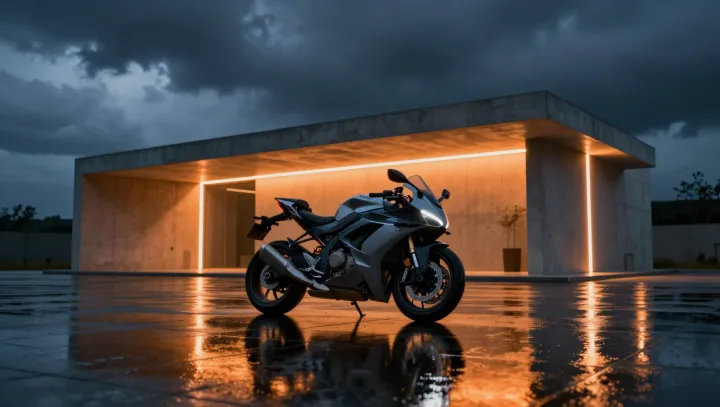
Eight seconds to 100 km/h is now branded slow by many riders; that verdict says more about psychology than physics. On public roads, a bike that reaches 100 km/h in eight seconds already clears most commuter cars, whose acceleration clusters around ten to twelve seconds, and even brushes against the pace of many so‑called performance hatchbacks.
The real distortion comes from track‑styled sportbikes, and from the spec sheet as a kind of scoreboard. Once riders see machines capable of sub‑four‑second launches, with high specific output engines, aggressive final drive ratios and launch control electronics, the human brain quietly shifts its reference point, a classic case of hedonic adaptation coupled with anchoring bias. Anything slower is framed as deficient, even if it is already beyond what traffic, tires and braking distances can sanely exploit on public asphalt.
Marketing pressure deepens the mismatch. Brochures headline 0–100 numbers and peak horsepower while burying torque curves, roll‑on acceleration and usable midrange, the parameters that actually decide whether a pass is clean or a merge feels effortless. Riders then judge a bike not by whether it out‑drags real‑world cars, but by whether it keeps up with a hyperbike in a fantasy drag race they will almost never run. On paper, expectations win. On the road, eight seconds already rewrites the commute.