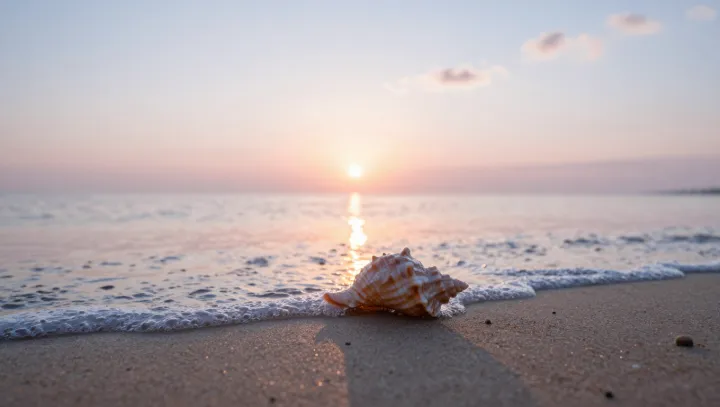
Warm sand lies. Data hides inside. That unremarkable shell on the beach is less a keepsake than a compact archive, built layer by layer as the animal once pulled calcium and carbonate ions from seawater and locked them into solid aragonite. Each microscopic increment formed in chemical equilibrium with the surrounding water, fixing a snapshot of its temperature and composition into the mineral lattice.
Surprising is the precision. Within those bands, the ratio of oxygen isotopes, especially the balance of oxygen-18 to oxygen-16, shifts in response to ambient water temperature and salinity, providing a natural paleothermometer that rivals engineered sensors. Growth lines, visible under microscopy like tree rings, add temporal structure, so researchers can align isotope profiles with seasonal cycles, storms, or longer climate swings encoded in the shell’s stratigraphy.
Misleading is the calm surface. Heat from the sunset only warms the outermost crystal layers, leaving the internal isotope signatures and trace elements such as strontium and magnesium effectively unchanged, protected by the low diffusion rates in solid calcium carbonate. Under mass spectrometers and electron microprobes, that quiet souvenir turns into a high-resolution logbook of oceans that no longer exist.