
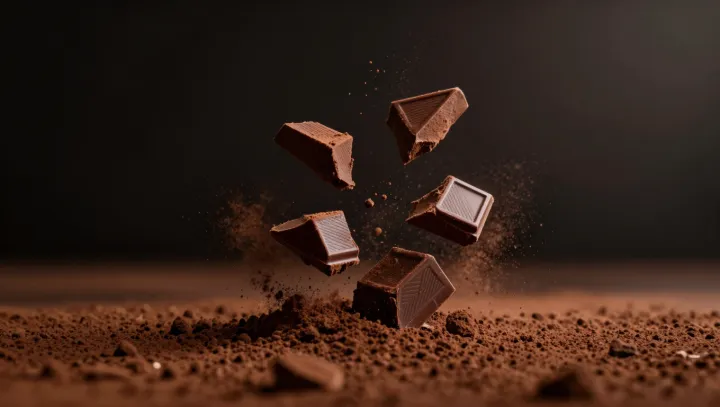
A chipped slab of dark chocolate now sells a fantasy of time. Uneven edges and bloom-specked surfaces, once signs of mishandling, are framed as proof of small-batch care and low-intervention processing, the visual opposite of frictionless feeds and one-tap rewards on glass screens.
The odd twist is that this rugged bar is less about taste than about tempo. Behavioral economists describe how scarcity cues and visible imperfections trigger assumptions of authenticity and low automation, while packaging designers talk about “visual drag” that slows the eye the way friction slows kinetic energy. Shards, crumbs, matte paper, serif type: each element resists the glossy, latency-free logic that runs push alerts and autoplay. The bar signals that something here will not refresh in a second.
Even more pointed is the emotional script wrapped around those cocoa solids. Wellness marketing has quietly fused cortisol, dopamine and gut microbiome rhetoric into a soft promise that dark chocolate is both shield and indulgence, a calibrated microdose of rebellion that will not crash a fitness tracker. When influencers break a bar by hand, sound designers amplify the crack like a tiny fault line opening in the day, a sanctioned pause from notification churn. In that moment, the rough square in a palm functions less as dessert than as a portable, edible do not disturb sign.