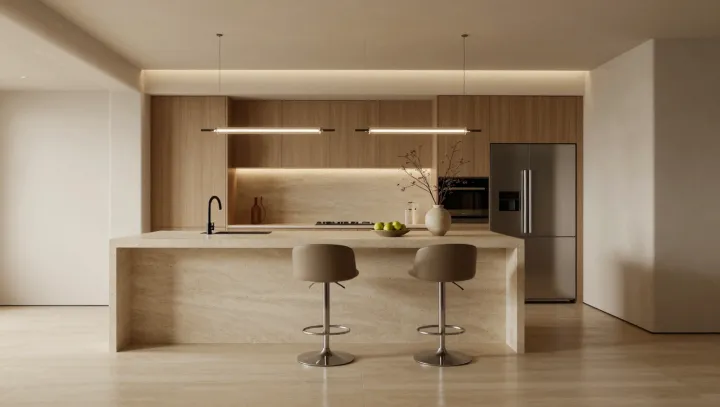
A kitchen island that is even slightly off in height steals minutes every day. By misaligning your elbows and wrists, it forces extra micro-movements that motor control research calls compensatory motion, and each unnecessary reach or tilt adds friction to chopping, mixing, and plating.
The smarter target is blunt: set your main work zone near standard counter height so your forearms hover close to ninety degrees, then keep the island surface within a narrow band of that point, rather than chasing styling trends. That alignment reduces strain on the cervical spine and lowers activation in the trapezius muscles, which in turn cuts subtle pauses as your body unconsciously protects tired joints and slows your pace.
Pendant lights, when dropped too low or scattered, quietly tax the brain more than the eyes. Glare and harsh contrast increase cognitive load in the visual cortex, forcing constant adaptation of the pupil and extra saccadic eye movements as you dodge hotspots and shadows across the cutting board.
Hang pendants high enough to clear your direct sightline while spacing them so light cones overlap into a single calm field, a layout that lighting designers model with luminance and uniformity ratio. That smooths edges, shrinks the number of micro-corrections as you hunt for a bright spot to dice an onion, and leaves your prefrontal cortex with less sensory housekeeping and more bandwidth for actual cooking.