
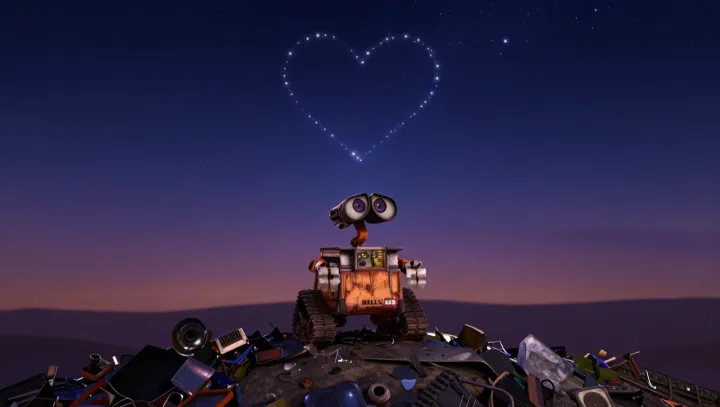
A trash cube is a harsher love story than any princess ball. The film’s opening bet is blunt: strip the planet, mute the humans, and watch a sanitation unit steal the audience’s heart.
What looks sentimental is actually a quiet model of emergent behavior. WALL-E begins as a basic actuator chain, running programmed cleaning routines, sensor checks and memory writes that resemble a bare-bones finite-state machine rather than a soulful character. Yet repetition under scarcity becomes narrative pressure: as automated peers fail, his solo feedback loop stretches across an empty city, turning error tolerance and data retention into something that reads as curiosity.
The stronger claim is political, not technical. By choosing a garbage compactor as its moral center, Pixar inverts the usual arc of consumer tech branding and pins the blame for planetary ruin on human convenience, not on rogue computation. The robot, bound by hard-coded directives and servo limits, still displays what looks like attachment and grief, while pampered passengers aboard the orbiting vessel surrender motor control and critical thought. Autonomy, the film suggests, does not require mystical consciousness; it only needs persistent routines, an environment that pushes back, and a contrast with people who have outsourced their own agency.