
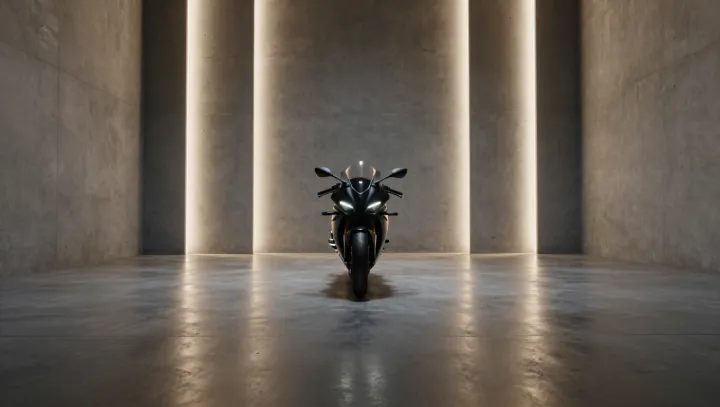
Bodywork hits the eye long before the spec sheet does. Razor fairings, split headlights, layered wings; the bike looks curated, not ridden. Yet those surfaces are first and foremost an answer to drag coefficients, boundary layer behavior, and the need to feed dense air to a tightly packaged combustion engine without cooking the rider.
The uncomfortable truth is that beauty here is almost a rounding error. Engineers chase laminar flow, pressure recovery, and usable downforce, then discover that the same CFD models which calm turbulence also carve dramatic creases and knife edges. Winglets are not jewelry; they manipulate stagnation pressure to keep the front tire loaded under brutal acceleration, turning what used to be an invisible vector diagram into a literal face of the machine.
What looks like sculpture is really ergonomics in armor. Tank humps, tail kicks, and scalloped seats are shaped by anthropometric data, load paths, and torsional stiffness targets, dictating where a rider can lock knees, brace elbows, and move weight midcorner. Only after that structural and aerodynamic shell is frozen do designers exploit the silhouette, leveraging color breaks and lighting to turn a fluid mechanics solution into a brand identity that could sit under a museum spotlight without changing a single bolt.