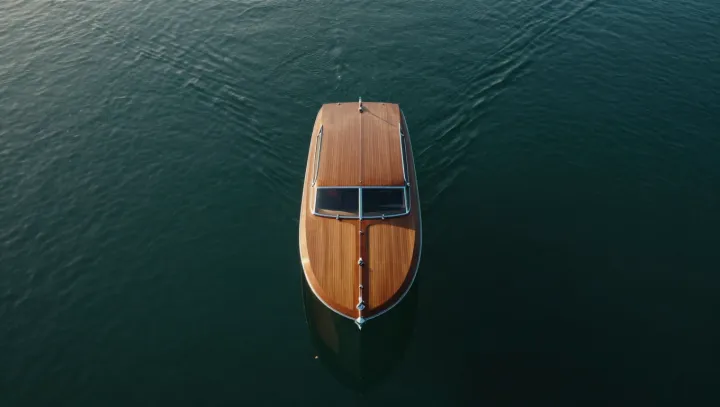
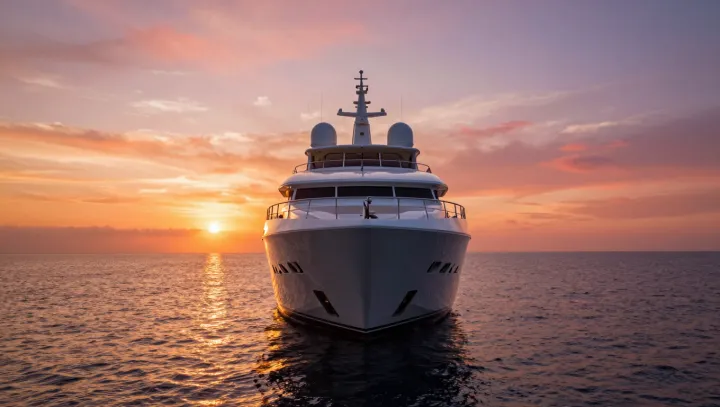
Calm decks on a superyacht are not an accident. Under the polished teak, the hull is sculpted like a stealth machine, its curves and chines tuned as carefully as an aircraft fuselage to resist roll and soften impact from confused seas.
The real surprise is that stability now comes less from bulk and more from lift. Instead of relying on a deep keel, designers use fin stabilizers that behave like underwater wings, generating hydrodynamic lift in the same way an aerofoil manipulates airflow. As the hull starts to roll, sensors feed data to an active control system, which rotates each fin to create lift opposite to the motion. This closed-loop control cuts roll angles dramatically and keeps glassware still while wave energy is still there, just redirected as controlled lift and drag.
Quiet is engineered, not gifted by size. By pairing these fins with carefully modeled bulbous bows and warped hull sections, naval architects spread pressure peaks and reduce slamming loads, which in turn lowers structure-borne vibration. Computational fluid dynamics and finite element analysis work in tandem: one predicts how water flows, the other how steel or composite panels flex and transmit noise. The result is a vessel that feels improbably still and hushed while its underwater wings and hidden geometry are working hard in silence.