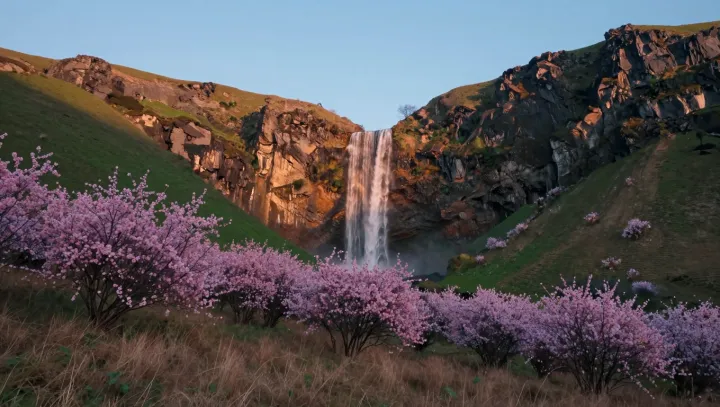
The cliff is lying. That sharp drop beside the river only looks permanent, while physics quietly moves it upstream, one fractured stone at a time, through a process geomorphologists call knickpoint retreat, in which the apparent edge of a waterfall is simply the current position of a migrating step in the bedrock.
This migration is no gentle drift. Water slams over the lip, accelerates, and excavates a deep plunge pool, where hydraulic shear stress and cavitation hammer the base of the fall so hard that blocks detach, undercutting the face that seemed immovable and forcing its collapse into the churning basin below.
What follows is brutal repetition. Fresh rock is exposed, the lip shifts a small distance upstream, and the cycle restarts, as sediment and boulders in the jet behave like abrasive tools that intensify abrasion and joint widening, so the waterfall acts less like a scenic ornament and more like a moving stone saw that methodically lengthens the canyon.
Headward erosion then takes command. As the step retreats against the river’s flow, tributaries adjust their gradients, side walls slump under gravity, and the entire valley system reorganizes around that creeping edge, which, over vast spans, trades a single dramatic drop for a long, carved corridor of rock and air.