
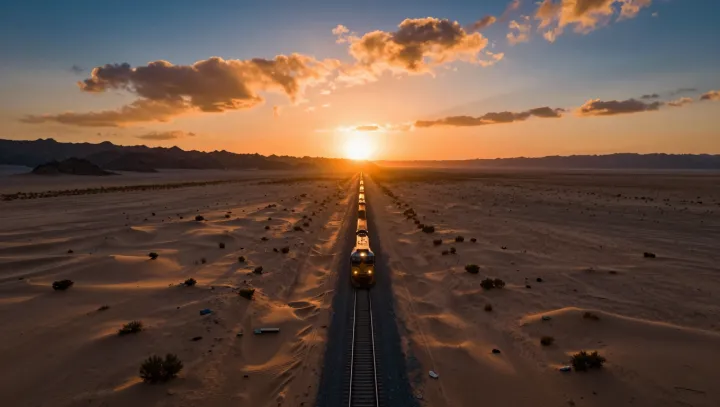
Heat makes the straight line lie. Across a desert corridor, identical track geometry delivers wildly different visibility windows as warm air bends light, washes out color contrast, and stretches reflections along the steel.
What looks like a single product on a blueprint becomes several operational products in the cab, because signal sighting distance and reaction time are not fixed engineering constants but moving targets shaped by refraction gradients, luminance, and human visual acuity under glare. Sunset compresses color perception. Heat haze mimics motion on the horizon. A signal that is comfortably readable at one point in the day degrades into a flicker of red and white, forcing earlier braking and lower line speed just to preserve the same braking curve and headway.
The blunt fact is that operators do not sell steel; they sell assured stopping distance. When shimmering air columns erase railhead definition and smear the boundary between sky and ballast, dispatchers must widen separation, adjust timetables, and treat one physical asset as if it were several, each with its own safe throughput envelope. The track has not moved a millimeter. Under desert heat and low sun, the product it represents on a control screen has quietly changed species.