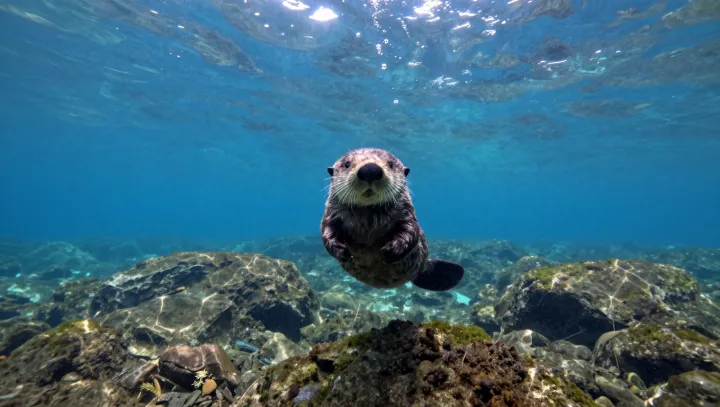
One quick gulp should not buy minutes underwater, yet for a sea otter it routinely does. A small lungful of air is taken at the surface, then packed not only into the lungs but also into compliant blood vessels and airways that behave like flexible reservoirs, so every pocket contributes to the dive budget.
The real trick is that oxygen is not hoarded, it is burned fast. Sea otters run one of the highest mass‑specific metabolic rates recorded for a marine mammal, with mitochondria in their skeletal muscle showing elevated proton leak and oxidative phosphorylation, so chemical energy turns into heat instead of efficient mechanical work. Short sentence. That heat offsets brutal conductive loss to cold water, meaning the animal can afford intense paddling and constant foraging without slipping into hypothermia mid‑dive.
Even more decisive is the coat. Each square unit of skin carries hundreds of thousands of hairs, creating a dry air layer that functions as a living wetsuit and sharply reduces the gradient that would strip heat and accelerate oxygen use. No blubber pad. No massive myoglobin stores like those in seals. Instead, rapid gas exchange in the lungs, high cardiac output, and meticulous grooming of that fur combine to turn a single, lightning‑fast inhalation into a tightly budgeted, heat‑driven hunting window below the kelp canopy.