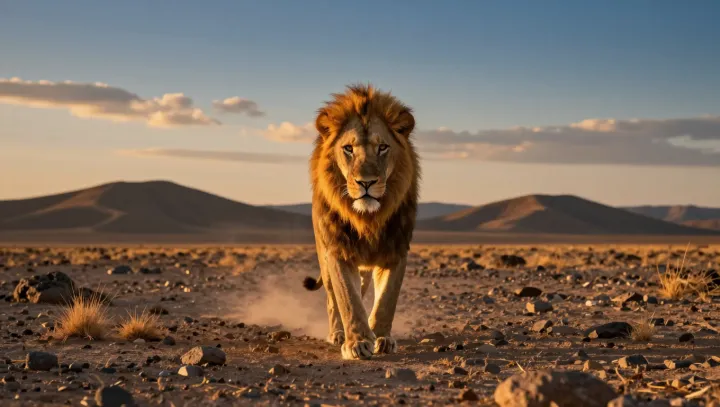
Sunlight on a lion’s back looks like a pause, not a tactic. That impression is wrong, because the slow walk across open ground is part of the same survival algorithm that later explodes into a sprint in the dark. Ethologists studying Panthera leo describe daytime movement as a budget meeting for muscle, heat and information, not a scenic stroll between naps.
Energy comes first. Muscle contraction is paid for in adenosine triphosphate, and high‑speed chases can burn a large share of a lion’s daily metabolic allowance in a single burst. Short steps in daylight, with long pauses and low heart rate, cut that cost while still allowing the animal to reposition near waterholes, grazing herds or shade lines that will matter when hunting conditions improve.
Heat may be an even harsher accountant. A charging lion in warm air risks hyperthermia because anaerobic glycolysis pours out both lactate and heat faster than blood flow and panting can clear them. Slow walking exposes the body to sun, but at a rate that skin, vasodilation and evaporative cooling can handle, letting the cat map wind, cover and escape routes without tipping its thermoregulatory system into crisis.
Information is the quiet prize. Each unhurried pass across open ground updates a mental model of herd spacing, rival patrols and scavenger activity. Scent marking, scrape marks and low‑key vocal checks during these walks maintain territory structure, which in turn shapes access to prey and mates. The famous dash at night is only the closing argument; the case is built one slow, sunlit step at a time.