
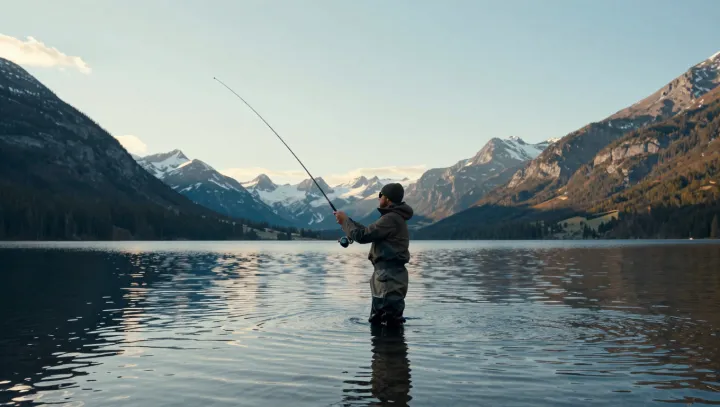
Broken surface glare, a subtle color shift, a faint V in the current. Those plain signals, not a carbon-fiber rod rack, decide how many fish actually touch your net. When anglers learn to read current seams, depth breaks and light angles, they are not adding trivia; they are decoding the hydraulics and optics that dictate where a fish can hold position with minimal energy and maximum feeding opportunity.
Most tackle upgrades only tweak presentation, while the river’s physics decide presence. Current seams form when laminar flow collides with slower eddies, creating velocity gradients that concentrate drifting invertebrates and baitfish. Depth transitions shape thermocline layers, oxygen distribution and safe ambush zones. Light angles, governed by refraction and Snell’s window, control how visible your line, lure profile and silhouette appear against the surface film and the riverbed.
The surprising truth is that a mid-range setup, placed with intent into a feeding lane, will often outfish a luxury arsenal sprayed at random water. Anglers who can read how a submerged boulder splits flow, how a ledge compresses current, how a low sun turns one bank into a mirror and the other into cover, quietly multiply their strike probability with every cast. The gear only sends the message. The river decides who hears it.