
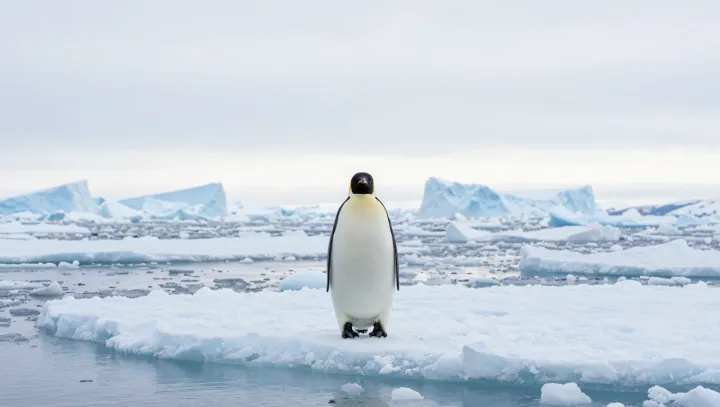
Bare ice should burn. Yet penguin skin stays close to what you would call room temperature while the bird stands motionless on a frozen sheet that would numb a human in seconds. That comfort is not luck; it is strict thermal accounting enforced by anatomy and blood chemistry working together in a tight energy budget.
At the heart of the trick is control. Blood vessels in the legs clamp down in intense vasoconstriction, so only a limited flow reaches the feet, while a dense layer of subcutaneous fat and feathers shields the core from conductive heat loss. Wrapped around each other, arteries and veins form a countercurrent heat exchanger, where warm arterial blood transfers energy to cooler venous blood returning from the feet, recycling warmth before it can leak into the ice.
The feet, oddly enough, are allowed to be cold. That is the point. Skin temperature there can hover just above freezing, sharply reducing the temperature gradient that drives heat diffusion into the ice, yet staying high enough to avoid tissue damage or ice crystal formation. Short, compact legs cut the exposed surface area, and the broad, flat sole spreads weight so pressure does not force extra blood into contact with the ice. Micro-adjustments in posture and tiny shifts in contact area fine-tune this balance, letting a penguin stand for long periods while its core stays warm and its feet stay just warm enough.