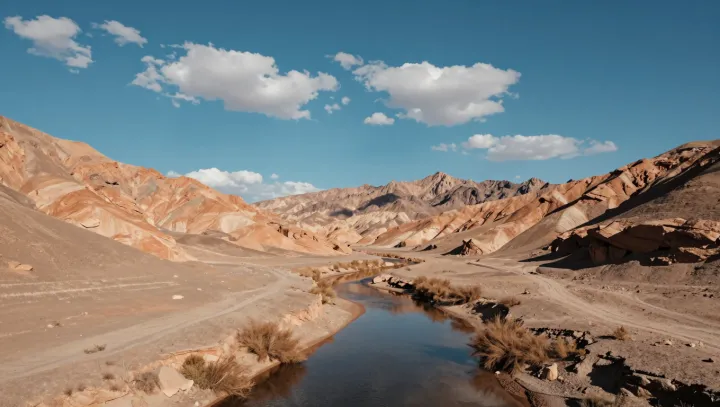
Those smooth river bends are not gentle at all. They are scars from a long mismatch between flowing water and stubborn rock, with the channel cutting down while the surrounding plateau barely moves. As bedrock channels incise, they lock in every inherited wiggle of an older, softer floodplain, preserving curves that no longer match the hard stone they slice through.
The real surprise is how little the dry rock can fight back. Mechanical weathering on the plateau is weak, and without steady surface water there is almost no lateral erosion, so cliffs stay jagged while only the wetted corridor changes. Inside that corridor, hydraulic shear stress and abrasion by sediment turn each flood into a grinding experiment, deepening the thalweg instead of widening the desert around it.
Underrated in this story is vertical control. The river is chained to its base level, often a distant sea or interior basin, and as regional uplift or slow subsidence shifts elevations, the channel responds by cutting down rather than wandering sideways. Groundwater seepage focuses chemical weathering along joints near the channel, preconditioning rock failure where water can reach and leaving high, dry surfaces almost untouched. What looks like an elegant curve is really a frozen trace of past flow, etched deeper with every rare storm.