
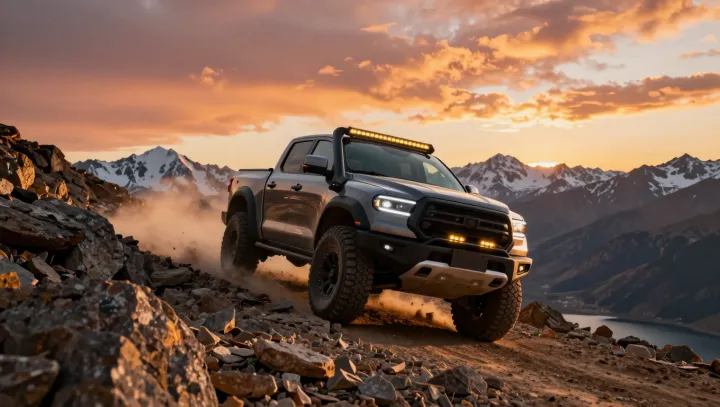
The angle that scares your eyes is not the angle that saves the truck. An electric pickup clinging to a rock slab is governed by friction coefficients, load transfer and suspension kinematics, not by how dramatic the tilt looks from the driver seat.
The harsh truth is that tire grip decides everything first. Short sentence. The friction force is the normal load on each tire multiplied by the tire–rock friction coefficient, so what matters is how much weight each contact patch carries and whether that patch stays flat on the stone. An electric motor can supply huge torque at zero revolutions per minute, but if weight has shifted off a front tire and the contact patch unloads, that wheel spins and the climb stalls, no matter how impressive the power figure.
Equally underestimated is suspension geometry. Another short one. Control arm angles, roll center height and anti-squat dictate how the body rolls and pitches as the truck crawls, which in turn sets the distribution of normal forces across the four tires. A low center of gravity helps, but only in concert with link placement that keeps tires in contact as they articulate over ledges; a truck that looks terrifyingly tilted can still sit well inside its static stability margin, while a flatter looking chassis with poor articulation can momentarily lift a wheel and lose the only grip that mattered.
So the eye is an unreliable sensor here. What counts on the slope is the invisible vector sum of gravity, normal force and friction at each tire, all sculpted by suspension design, while the electric drivetrain mostly waits for those few square inches of rubber to decide whether the climb continues or ends.