
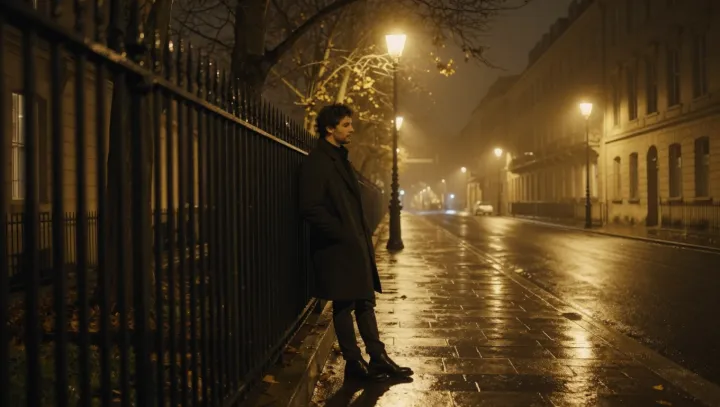
A wet street does not just shine. It edits the light. A thin, smooth film of water on rough asphalt turns a chaotic scatterer into something closer to a polished surface, so light from headlights, windows and signs is steered into cleaner, mirror like paths instead of being bounced in all directions by dry grit.
The real trick sits in the angle. At shallow viewing angles, specular reflection dominates because the angle of incidence nearly matches the angle that sends light straight to your eyes, while diffuse reflection from the asphalt beneath is pushed away. Fresnel equations from geometric optics describe this shift: as the angle grazes the surface, the reflected portion of light from the air water boundary increases, and the transmitted portion that would dive into the asphalt and scatter loses relative weight in what you see.
Look straight down and the story collapses. Now the reflected light from that same air water interface competes with light that passes through, hits the rough asphalt microstructure, then returns as diffuse reflection, smearing detail. Total internal reflection does not rescue the view either, because the light is coming from air into water, not trying to escape from a dense medium, so the surface never becomes a perfect mirror, only an angle sensitive compromise.