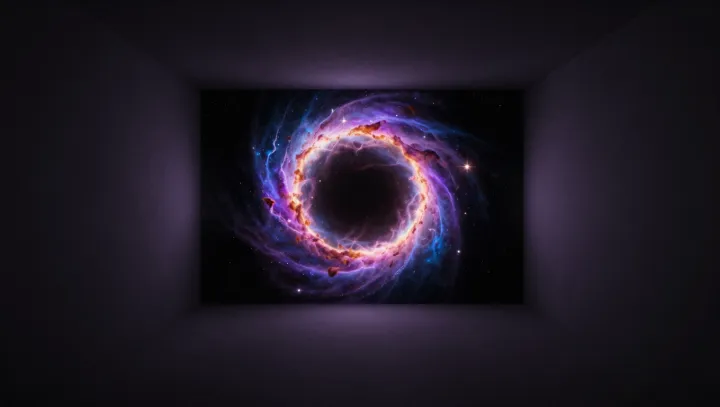
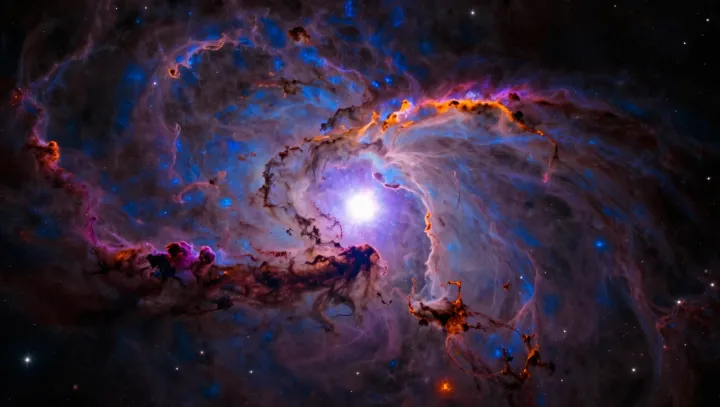
The emptiness is the main actor here. A vast bubble inside a glowing nebula looks like a cosmic absence, yet it screams of excess energy. A handful of massive young stars flood their surroundings with ultraviolet photons that ionize hydrogen, heat gas to extreme temperatures, and drive it outward as an expanding shell over light‑year scales.
The surprising part is efficiency. Radiation pressure, the direct push from intense photon flux on dust grains and gas, adds momentum long before any explosion; coupled with thermal pressure from photoionization, it excavates a cavity that grows as long as the stars keep burning hot and blue. Around them, the H II region becomes a low‑density bubble, its edge traced by a bright, compressed rim of gas and dust.
The real violence arrives later. Line‑driven stellar winds from these giant stars, moving at hundreds or thousands of kilometers per second, inject mechanical energy that stirs turbulence and hollows the interior even more. When the most massive star collapses and triggers a supernova, its blast wave plows through the already‑thinned medium, sweeping remaining gas into filaments and thickening the cavity wall, leaving the nebula branded with a cavity far larger than the small cluster that created it.