
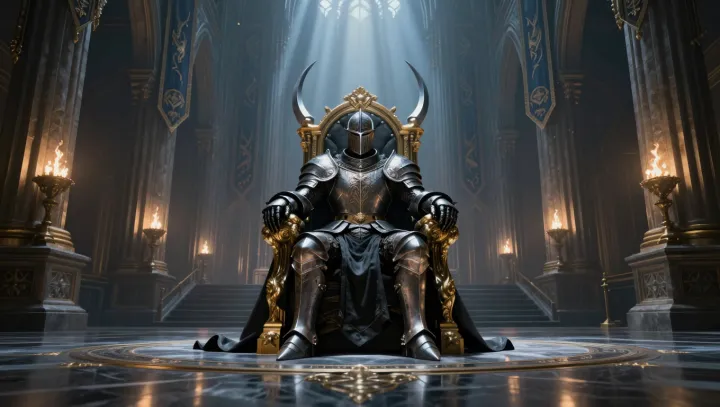
Authority looks clearest when it is a lie. A single throne, lit and raised, compresses power into one visible body, while any council muddies the signal through competing faces, shifting glances and overlapping voices. Human attention is a scarce resource; cognitive scientists describe it as a narrow spotlight, not a floodlight, and the throne gives that spotlight one target, not twelve.
The harsher claim is that our minds still read courts like primate troops. In primatology and social neuroscience, dominance is inferred from posture, elevation and uncontested space; a lone, armored figure high above the floor checks every box in that algorithm. A council chamber, with papers, microphones and procedural rules, broadcasts distributed power, but it also scrambles those old dominance cues that our visual cortex and amygdala process in milliseconds.
Myth finishes what biology starts. Narratology and cognitive anthropology both show a bias toward single-agent stories, because one hero or tyrant makes causality easy to remember and blame easy to assign. A throne is a plot device you can sketch in three strokes. A council is a committee meeting of causes and constraints, accurate to how decisions are negotiated, yet stubbornly resistant to the kind of clean, moral shorthand audiences still crave.