
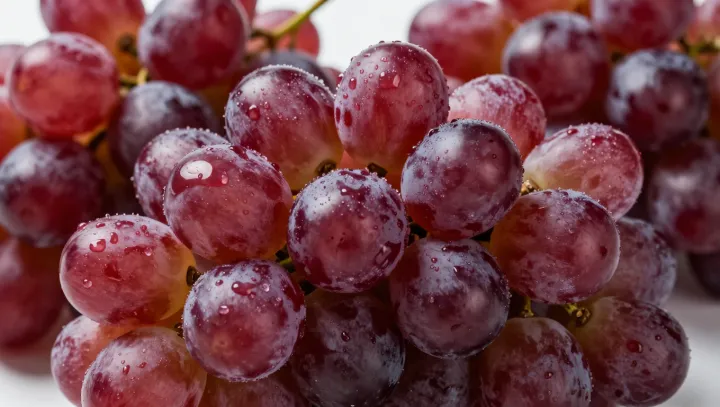
Shine lies. A grape glistening with droplets feels fresher to the eye than a dry one, yet that surface sparkle tracks appearance far more than chemistry, sweetness, or vitamin load hidden under the skin.
The bias is blunt. Human vision was tuned for survival, not for micronutrient accounting, so the visual cortex and midbrain orienting network grab onto high-contrast specular highlights, sharp edges of light that water and wax create on the curved surface of the fruit. Those tiny flashes act as salience cues, pushing the object to the front of perceptual priority, while the gustatory system and metabolic pathways that actually register sugar and nutrients stay offline until after a bite.
Freshness, in practice, is guessed. In ancestral settings, moisture on plant matter loosely correlated with recent harvest and lower microbial load, so brains that treated gloss and dew as a fast heuristic for safety gained a small survival edge, and that shortcut is still embedded in dopaminergic reward circuits. Marketing exploits the gap: cold mist in supermarket displays and high-gloss photography amplify luminance contrast and perceived juiciness, even though objective measures such as Brix value, fiber content, or polyphenol concentration remain unchanged by that theatrical layer of water.
The effect goes deeper than taste. Functional imaging shows that when people view wet, glossy fruit, reward-related regions in the ventral striatum respond more strongly than when they view the same items digitally mattified, indicating that the visual gloss signal alone can pre-activate expectation of pleasure. The brain effectively outsources a complex biochemical evaluation to a cheap optical shortcut, letting a few bright reflections stand in for an entire hidden interior.