
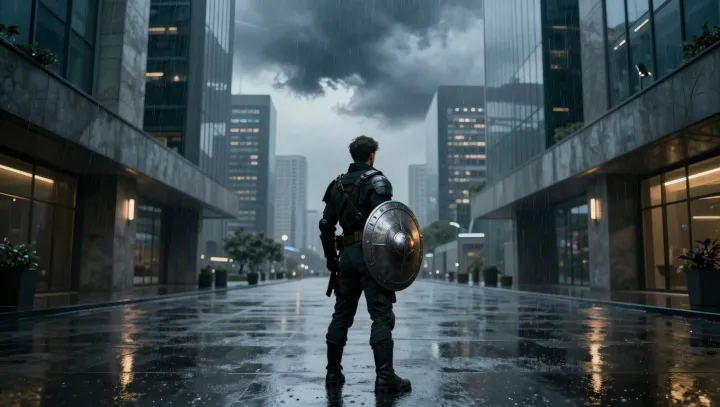
Rain on steel looks heroic; on glass lenses it is deadly. In a saturated megacity, the real threat to a costumed fighter is not gunfire but the mesh of CCTV domes, quadcopter rotors and cell tower pings that form a silent perimeter around every block.
The romantic idea is wrong: a shield does not stop an algorithm. Computer vision, especially facial recognition and gait analysis, works from partial frames, from the angle of a jaw, from the cadence of a stride. A raised shield might block one camera, yet the surrounding grid, stitched by video analytics and device geolocation, reconstructs the path with machine learning models trained on millions of prior movements.
The smarter move is misdirection, not impact. To stay ghostlike, a modern hero would study how automatic number plate recognition, Wi‑Fi probe requests and payment tokenization feed into data fusion engines that assign risk scores to locations and bodies. He would time raids to maintenance gaps in the network, seek shadow cones between overlapping fields of view, and use decoy signals to poison pattern‑of‑life datasets.
Bravery is cheap when every angle is filmed. What has value is tradecraft: understanding compression artifacts, infrared sensitivity, and retention policies well enough to know which fight can happen in public and which must live forever off the record.