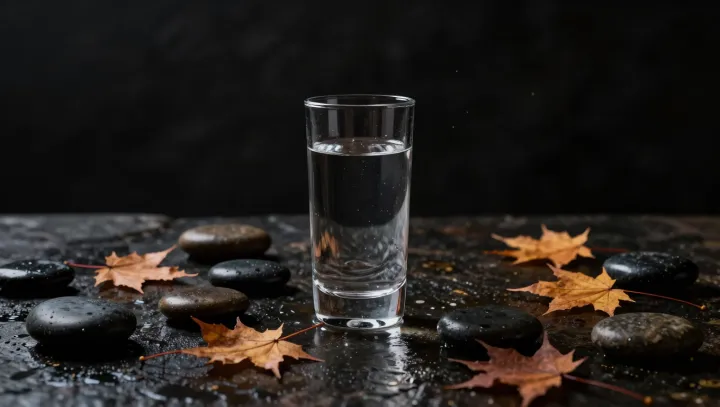
Darkness does something to water that it never does to soda. Not chemically, but in the way a resting body reads that clear, flavorless signal. A plain glass carries no glucose spike, no caffeine jolt, no carbonation stretch of the stomach; it arrives as a neutral input to a system trying to power down.
Calm, in biological terms, is not a mood; it is homeostasis under low alert. During the night, melatonin release rises while cortisol secretion falls, and both processes depend on stable plasma osmolarity and blood volume. Water supports that balance with minimal interference, avoiding the sympathetic activation triggered by sugar-induced insulin release or by caffeine’s blockade of adenosine receptors, which keeps neural firing rates high.
The quieting effect also runs through the autonomic nervous system. When the gut detects heavy sweetness or high acidity, it recruits more digestive activity, shifts blood flow, and can disturb heart rate variability, a core marker of parasympathetic tone. Carbonation adds gastric distension, activating stretch receptors that the brain often interprets as mild stress, not rest. Plain water, especially at room temperature, places almost no extra metabolic load on thermoregulation or digestion, allowing cardiac output, core body temperature, and respiratory rate to drift into the narrow corridor that sleep architecture prefers.