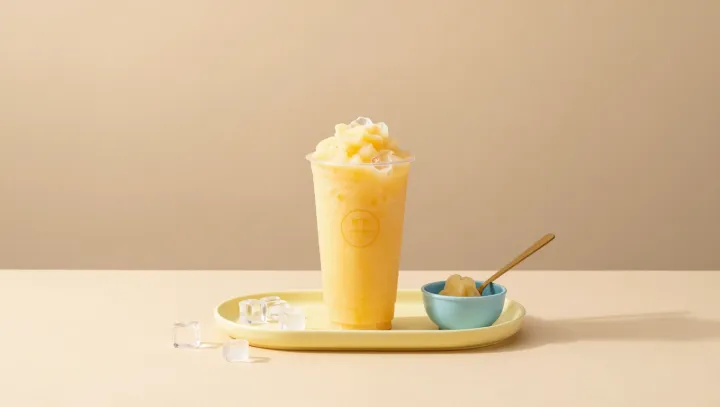
Frozen juice slush cheats your senses. The flavor seems louder just as the chemistry becomes more uneven and selective inside the glass. As water begins to freeze, the process called fractional crystallization pushes sugars, organic acids and volatile aroma molecules out of the growing ice lattice and into the remaining liquid phase, so the unfrozen pockets become more concentrated than the original juice.
That concentration is not subtle. It spikes local levels of citric acid, fructose and esters in the liquid channels that still flow around the crystals, while the pure ice itself contributes almost nothing except temperature and texture. Because freezing point depression keeps those channels liquid at lower temperatures, each sip delivers tiny shots of overstrength syrup sliding between shards of nearly flavorless ice, rather than a uniform, gently sweet solution.
Cold should mute taste, yet here it mostly edits it. Lower temperature suppresses bitterness receptors more strongly than those tuned to sourness or sweetness, and numbs viscosity cues that would normally signal dilution. At the same time, mechanical shear from chewing the crystals blasts more aroma compounds into the air, boosting retronasal olfaction. What reaches the brain is not a weaker drink, but a sharper, cleaner signal carved out by phase change.