
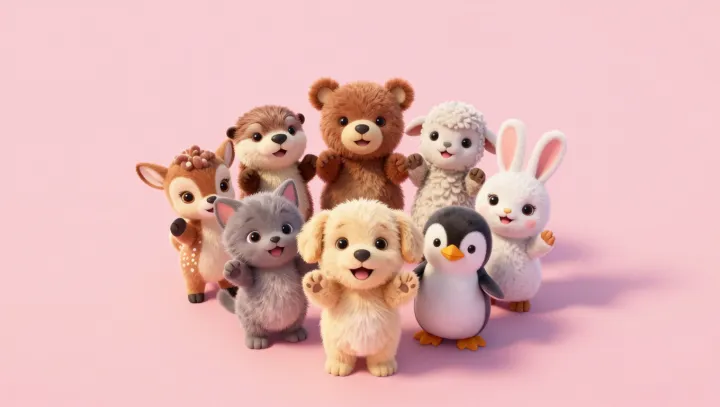
A pink backdrop does more work than any baby animal in front of it. Against that uniform field, a scatter of tiny faces instantly fuses into one sugary mass, because the visual system grabs for common expression before it bothers with identity.
This bias is no soft, sentimental quirk; it is hardwired efficiency. Early in the visual cortex, mechanisms for feature integration sweep across the scene, locking onto shared cues in eye shape, mouth curvature and head tilt, then handing that bundle upward as a single “affective set.” Only later do higher-order regions tasked with facial recognition attempt to separate the lamb from the puppy or the duckling. Grouped emotion is processed as a global property, while individual faces are treated as costly detail.
The crowd feels cuter than any one animal because the brain is effectively averaging. It amplifies a common infant schema—oversized eyes, rounded contours, soft mouths—through ensemble coding, the same statistical shortcut it uses to gauge a crowd’s mood at a glance. That jumble on pink is not just décor; it is a live demonstration that shared expression wins the race to consciousness, and that individuality, charming as it is, arrives slightly late.