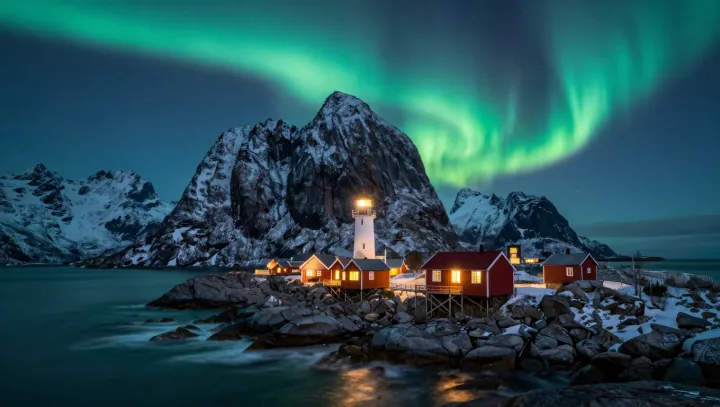
Dark water should mean dark hours, yet the harbor sometimes blazes when the Sun is gone. Over the silent boats, the sky flashes green and violet, as if some invisible switchboard had been thrown wide open, bathing nets, masts, and wet concrete in a light that seems to come from nowhere near the horizon.
This upside-down logic starts high above those boats. Far beyond the air you breathe, streams of charged particles from the Sun slam into the planet’s magnetosphere, are funneled along magnetic field lines, and finally crash into atoms in the upper atmosphere. Electrons in oxygen and nitrogen jump to excited quantum states, then drop back, releasing photons in narrow, intense bands that can beat the dimming glow of a late sunset on the sea.
What looks like soft color is in fact hard physics. When geomagnetic storms pump extra energy into this system, the auroral oval can slide toward lower latitudes, suddenly putting a modest fishing village under a sky bright enough to cast shadows. Streetlamps stay the same. The Sun is long gone. Yet the planet’s own magnetic architecture briefly deputizes the upper atmosphere as a giant, flickering light panel over the sleeping harbor.