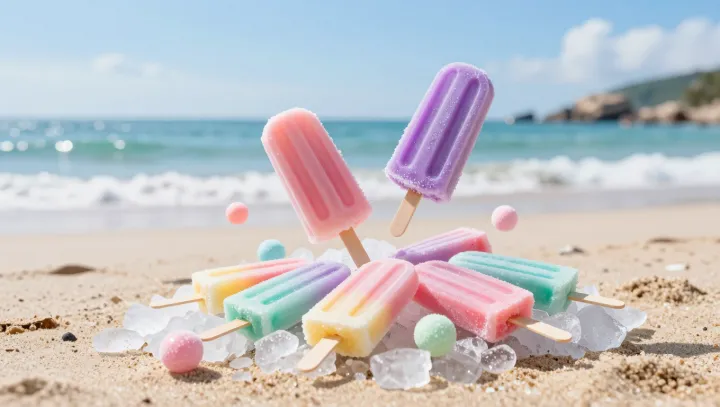
One fruit, two pops, zero agreement on taste. That mismatch is not magic; it is physical chemistry rewriting flavor on a microscopic stage. When sugar concentration shifts even slightly, colligative properties kick in, lowering the freezing point and trapping more liquid syrup between forming ice. That unfrozen phase holds aromatic compounds and acids, so a sweeter mix can taste louder, brighter, while using exactly the same fruit puree.
More surprising is how freezing speed bullies texture and flavor at once. Slow freezing gives water time to migrate and assemble into large ice crystals, which push sugars and volatiles into narrow pockets that hit your tongue in erratic bursts. Rapid freezing generates fine crystals with a larger total surface area, creating a smoother matrix that releases flavor molecules more evenly, so the same recipe can feel cleaner, sharper, almost more honest.
Most decisive, though, is structure your eyes never see. Ice-crystal size distribution and the glass transition of concentrated sugar solution determine how fast the pop melts and how quickly sucrose and fructose reach taste receptors. A coarser pop melts in pulses and mutes acidity; a finely frozen one melts in a steady film, lifting aroma to the nose and making two genetically identical pops taste like distant relatives.