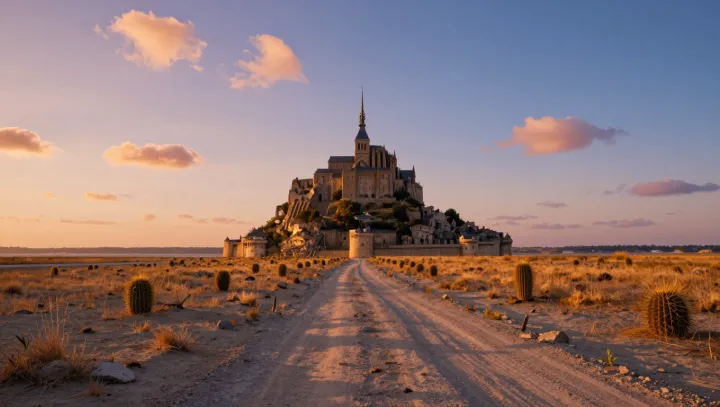

That motionless lighthouse is lying. Against its stone, the planet is spinning, the air is shearing, the sea is reorganising itself cell by cell in fluid dynamics that never pause, and a camera that returns to the same railing at each sunset will log that change with a rigor no nostalgic slideshow can match.
Memory, not technology, is the unreliable witness here. Human recall applies unconscious white balance, contrast boosting and loss compression, while a stable lens on a fixed focal length quietly records variations in solar elevation angle, Rayleigh scattering in the atmosphere and the exact geometry of wave interference patterns as wind fields and pressure gradients slide past the coast.
The still frame, many argue, flattens reality; a lighthouse sequence does the opposite. Lock exposure and tripod position, and the series becomes a crude but honest observatory, capturing shifts in aerosol optical depth, cloud microphysics and sea state indices that indicate changing fetch and swell direction, all without the flattering edits that turn so many travel photos into fiction.
What looks like repetition is, in fact, data. In those near-identical silhouettes, the horizon line creeps, cloud bases lift or sink, wave periods stretch, and the only constant is the tower’s geometry, serving as the calibration mark that reveals how restlessly the planet beneath it is turning.