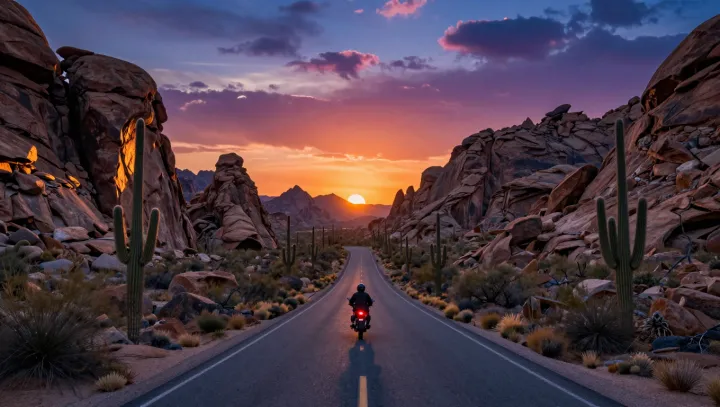
Heat, not cold, feels like the obvious threat on a desert trail, yet dusk quietly flips the danger. Air that baked all afternoon begins to cool fast, while rock and sand radiate stored energy into a sky that offers little insulation, pushing surface temperature down in a steep gradient.
The real problem is that the rider’s own cooling system keeps working on yesterday’s settings. Human thermoregulation and sweat evaporation do not instantly adapt when the sun drops; glands still pump fluid as if solar radiation were high, coating skin and clothing with moisture just as ambient temperature starts to plunge and convective heat loss ramps up.
Wind turns this mismatch into a threat. At riding speed, relative wind speed spikes, boosting convective heat transfer and what meteorologists quantify as windchill, so each gram of evaporating sweat pulls latent heat from the skin and underlying blood far faster than metabolic heat from muscles can replace it.
Layered onto that is a psychological trap. Feeling warm from exertion, a rider may unzip vents or skip extra layers, not realizing core body temperature can drift downward once sweat-soaked fabric meets cooler, fast-moving air, nudging the body toward mild hypothermia even while the ground still looks like an oven.