
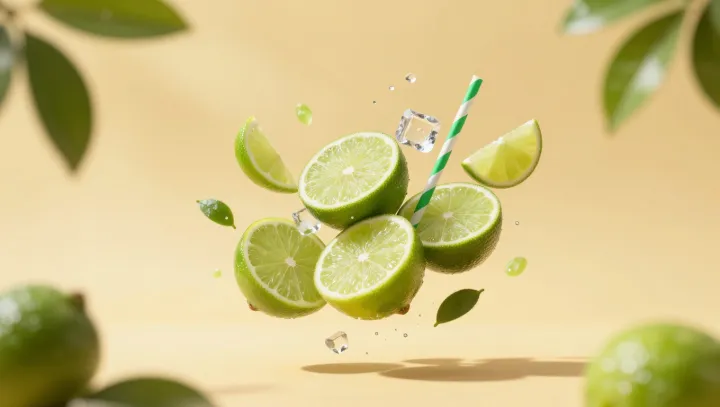
That tiny squeeze of lime does not behave like a garnish; it behaves like a chemical editor. A few drops deliver citric acid and aromatic terpenes that hit two sensory systems at once, forcing taste buds and olfactory neurons to renegotiate what the drink even is.
The bold claim is this: lime changes structure more than it changes quantity. On the tongue, citric acid floods ion channels associated with sour taste receptors, which in turn suppress some bitter signaling and sharpen contrast against any existing sugar. A drink with the same objective sucrose concentration can register as noticeably sweeter because bitterness is damped and the dynamic range between sour and sweet expands.
Even more power sits in the vapors. Lime peel oils carry molecules such as limonene and citral that light up olfactory receptor neurons, and those nasal signals are integrated in the brain with data from gustatory pathways. This cross‑talk, known in sensory science as retronasal olfaction and multisensory integration, tricks perception into finding ripeness, freshness, even a hint of candy where the base liquid has not changed at all.
The uncomfortable lesson for anyone counting only grams of sugar is clear. Flavor is less a property of the drink and more a negotiated outcome between chemistry and neural circuitry, and lime is a ruthlessly efficient negotiator.