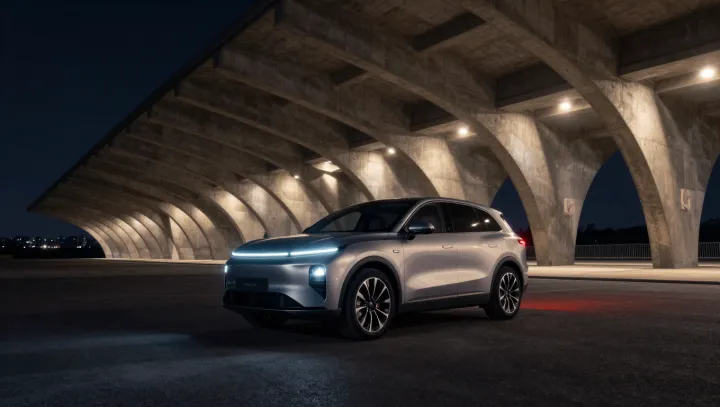
Headlights on wet asphalt tell the truth first. Modern SUVs are not optimized for empty highways; their safety envelope is drawn around cluttered streets, blind corners and sudden braking lights. Regulatory crash tests, consumer ratings and insurance data all lean toward low to mid‑speed impact scenarios that mirror night traffic in dense districts.
Urban risk, not open‑road drama, dominates the engineering brief. Frontal and side structures are tuned for energy absorption in offset collisions and side‑impact with shorter stopping distances, because most injury‑producing crashes happen below high freeway speeds. Crumple zones, load paths and restraint systems are modeled through finite element analysis for cross‑traffic at intersections, not just clean, head‑on strikes along straight pavement.
The real surprise sits in the software stack. Advanced driver‑assistance systems rely on radar, lidar and camera fusion that actually gain relevance where visibility drops and objects multiply: parked cars, cyclists, delivery vans, reflective puddles. Algorithms for automatic emergency braking and pedestrian detection are calibrated for cluttered backgrounds and erratic motion, while lane‑keeping assistance plays a secondary role when sharp curbs and parked vehicles, not painted lines, define the survival space.