
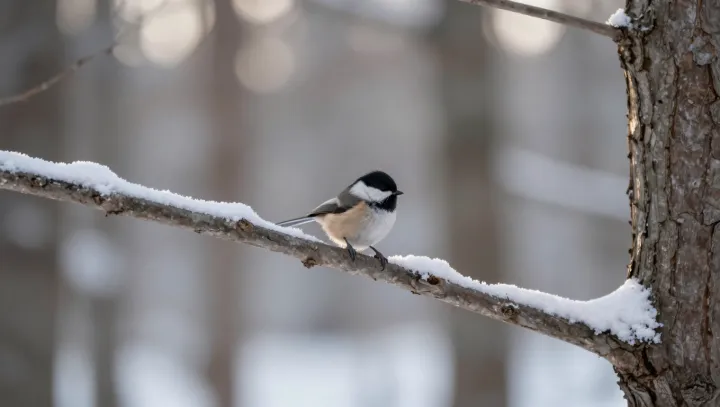
Cold is not the enemy; waste is. A chickadee, lighter than a sheet of paper, survives nights that would kill many larger birds by treating its own body like a budget spreadsheet. Through nocturnal hypothermia, a controlled drop in body temperature, it trims energy costs while keeping vital systems just above failure.
This is not full hibernation. It is a narrow physiological corridor. Body temperature can fall many degrees, yet the hypothalamus still runs thermoregulation, and brown adipose–like heat production in specialized muscles stands ready. Metabolic rate plunges, heart and breathing slow, but ion gradients across cell membranes and neural circuits remain protected from ice damage.
Energy, not bravery, sets the rules. Before nightfall, the bird packs fat reserves, then locks in savings by lowering its thermal set point rather than burning fuel to stay warm. Subcutaneous insulation, feather fluffing, and peripheral vasoconstriction support this mini shutdown. At first light, hormonal signals raise the set point again, metabolism surges, shivering thermogenesis kicks in, and the bird powers back to full temperature as if rebooting a carefully throttled system.