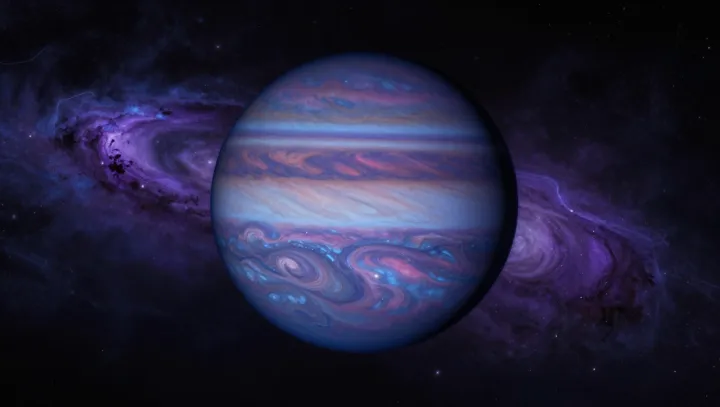
A lone gas giant is not an error of nature; it is a finished argument between forces that refused a truce. Bright starlight pushes, gravity pulls, and in that mismatch a planet can be kicked clear of its parent system. Radiation pressure from intense photons acts on dust and gas in the protoplanetary disk, reshaping where mass piles up and where it is stripped away.
More decisive than light, though, is gravity gone slightly off balance. In a young system, several giant planets raise mutual perturbations until one gains excess orbital energy. Through repeated three‑body interactions, the unlucky giant is slung outward while the survivors sink inward, a classic N‑body instability that astrophysicists track with long numerical simulations.
The hidden tug‑of‑war is not a gentle equilibrium; it is a series of sharp trades in angular momentum. Stellar irradiation alters the disk’s viscosity and density profile, which changes migration rates and sets up resonances that amplify gravitational kicks. One strong encounter, and the planet’s escape velocity is met. The star keeps its light. The giant keeps its freedom.