
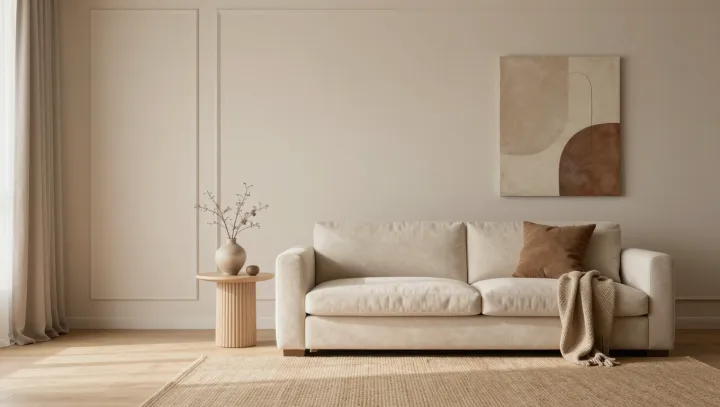
A bare coffee table can beat any storage hack. Even when a minimal, warm-toned living room takes as long to vacuum and dust as a vivid, object-packed one, the brain flags the first as cleaner. That judgment starts with visual search: fewer items mean fewer edges, color jumps and object boundaries for the visual cortex to parse, so the scene reaches a stable interpretation faster.
The tidy feeling is really a drop in cognitive load. With less visual clutter, working memory does not need to constantly track where objects begin and end, or resolve figure–ground conflicts, which lowers what psychologists label extraneous cognitive load. Warm neutrals add a second, quieter effect. Because they sit close together in color space, they generate weaker luminance contrast, so attention networks in the parietal cortex fire fewer orienting responses than they do in a room full of saturated accents.
Designers are not just chasing taste here; they are exploiting attentional bottlenecks. In a sparse, neutral room, prediction error in the visual system stays low, so the brain stops scanning and treats the environment as low-risk and orderly. That subjective calm is what most people describe as clean, even when the same crumbs still hide under the sofa.