
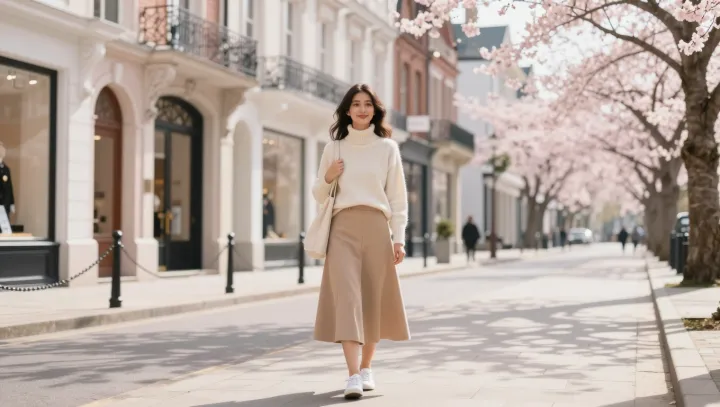
Soft neutral outfits whisper something bolder than any logo. Pale stone, warm sand, muted cream; these shades flatten contrast, so the body reads as a calm block of tone, a visual cue psychologists link to lower perceived threat and higher social ease. When fabric falls in loose, fluid shapes, it adds one more signal: this person is not optimising for efficiency or hustle, but for comfort and spatial freedom.
Loud branding, by contrast, often functions like shouting in a quiet room. Large logos and high-chroma color spikes push the eye into rapid saccades, a form of visual noise that status researchers associate with what they call compensatory display, the urge to prove standing rather than assume it. Soft neutrals flip that script. They rely on material quality, drape, and proportion, a logic closer to information asymmetry: if you know, you know; if you do not, the message was never meant for you.
Spring makes this contrast starker. Light, breathable textiles in relaxed cuts suggest someone who can afford climate control, shade, and private transport; they do not need rugged gear or shouty branding to secure attention or safety. Logos chase recognition. Neutrals choose selectivity. On a bright street, the most confident person is often the one whose clothes almost disappear into the light.