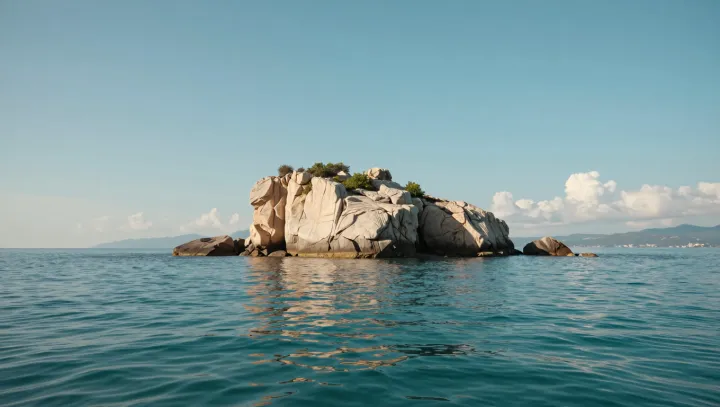
A bare rock rising from clear water makes a blunt claim: drama can be slow. Around that stack, every missing fragment of cliff has a quiet cause, written not in explosions but in abrasion, weathering and hydraulic action that work without pause.
The sharper the column, the less it owes to catastrophe. Coastal geomorphology shows that wave refraction, differential erosion and joint-controlled failure routinely isolate such towers from headlands, as softer strata yield grain by grain while harder beds persist as narrow pillars long after arches and caves have collapsed in stages.
Random disaster, by contrast, leaves messy signatures. A single storm surge or submarine slide scatters blocks, slumps whole slopes and produces chaotic breccia, yet it rarely sculpts clean vertical walls or evenly undercut notches that match tidal range and wave energy the way this lone stack does.
What looks like a geological accident is usually a record of process control. Each ripple line at the base tracks hydraulic pressure cycles, each fracture on its flanks follows stress-field geometry, and its very survival in open surf marks the slow arithmetic of erosion rates beating, quietly but decisively, any story of sudden ruin.