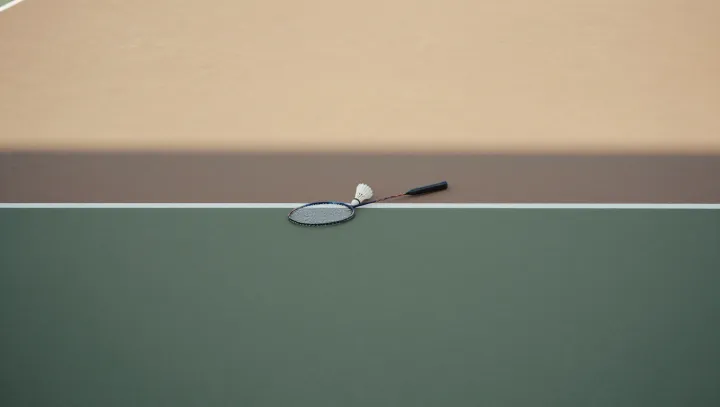

An empty horizon lies. It insists your body is smaller than you thought and that the last few minutes were far longer than your watch will admit. In vast, silent settings, the brain loses the usual clutter of depth cues and social reference points that anchor personal scale and duration, so its internal estimates drift.
The odd part is that this distortion is not a glitch; it is a feature of spatial computation. When the visual field is dominated by uniform sand or rock and a remote snow line, the parietal cortex and dorsal visual stream must infer distance from minimal texture gradients and atmospheric perspective, which pushes perceived scale outward and makes your own body the only small, stable unit left in the scene. With few nearby objects to calibrate egocentric space, size constancy slips, and the self shrinks against the frame.
Time stretches for the same structural reason. In a city, constant novelty drives high sensory entropy and allows the brain’s predictive coding machinery to compress experience; little needs to be written to memory. In a silent desert or under slow, frozen peaks, external change is scarce, so interoceptive signals, heartbeat and breathing, along with default mode network activity, occupy more bandwidth. More discrete events are tagged in episodic memory, and the internal pacemaker systems linked to the basal ganglia and supplementary motor area register a denser sequence of ticks. The result feels like elongated minutes and an oddly diminished self, carved down by space and padded out by time.
What looks like stillness is, in practice, a lab that reweights every variable in your spatial and temporal code, then quietly rewrites your sense of where you end and the world begins.