
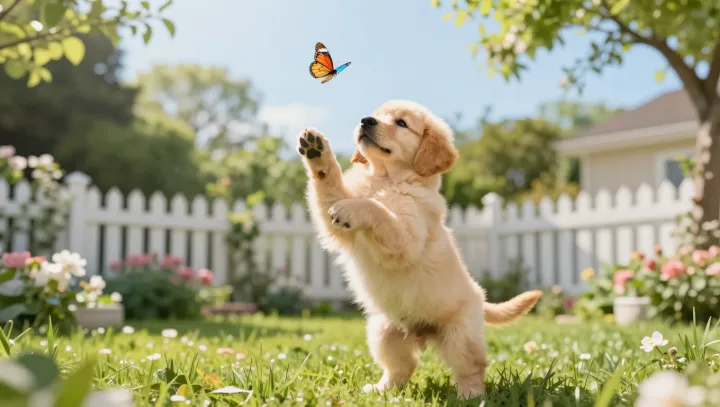
That puppy gaze is not mercy. Nor blame. Between its eyes and the drifting butterfly runs a basic attention circuit, while in the human onlooker a far more baroque system, involving prefrontal cortex and theory of mind, rushes to assign motive, guilt and absolution where none exists.
Misreading that scene is not a cute quirk; it is a cognitive error with a name: anthropomorphism. Ethologists have long warned that simple orienting responses and stimulus–response loops are being dressed up as contrition, loyalty or moral insight, even though the underlying neurobiology reflects associative learning, reward prediction error and threat detection rather than any structured sense of right and wrong.
The harder claim is this. When a person feels judged by a puppy, the judgment lives entirely in human neural architecture built for social evaluation, including moral disgust and reputational concern, not in the animal’s brain, which lacks the cortical density and abstract processing required for codified ethics. The dog tracks movement, salience and tone of voice; the human supplies sin, forgiveness and a story.