
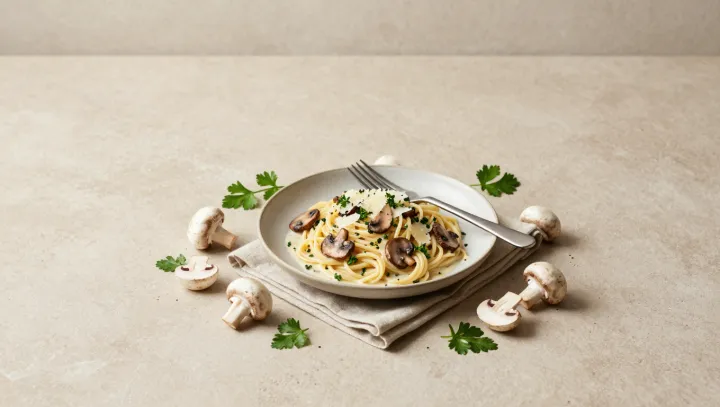
A bowl that looks big already wins. Volumetrics, the study of energy density in food, shows that people stop eating partly when their eyes and stomach register space, not when a calorie counter in the brain hits some target.
That is why loading pasta with mushrooms and herbs is smarter than it sounds, even at identical calories to a plain, smaller bowl. Mushrooms carry high water content and fiber yet minimal energy density, so they expand the physical volume of the meal while barely touching the energy tally, stretching the stomach wall and activating mechanoreceptors that feed satiety signals along the vagus nerve.
The move also slows you down. More pieces, more chewing. Extended oral exposure changes post‑meal appetite scores and modulates release of gut peptides such as cholecystokinin and glucagon‑like peptide‑1, both central to short‑term appetite control. Herbs then pull a quiet psychological trick: aroma and visual complexity increase sensory‑specific satisfaction, so the brain codes the dish as abundant and complete rather than sparse or diet‑like, even though the fat‑loss math has not budged.