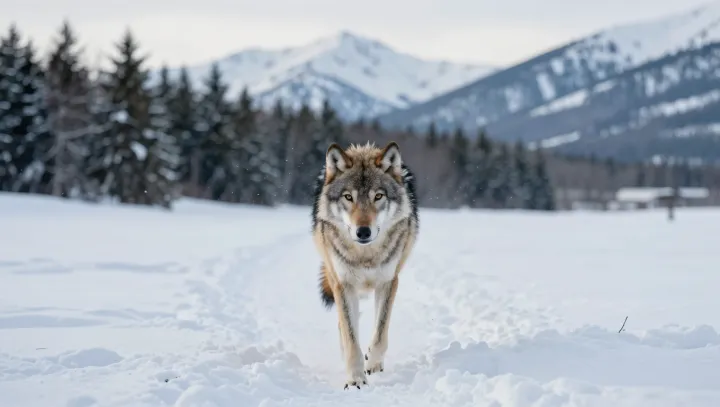
Deep snow makes speed look foolish. A lone wolf moving through it adopts a slow, almost monotonous gait, each paw dropping into the track of the last to cut resistance and preserve limited fat reserves. This is not laziness; it is biomechanics and thermoregulation, a strategy tuned to the harsh arithmetic of energy budgets.
High performers pretend they are exceptions to that arithmetic, and they are wrong. The wolf trades velocity for endurance, reducing muscular power output and oxygen demand so that glycogen does not crash before the hunt matters. Knowledge workers face a similar constraint in the form of working memory and decision fatigue, where constant task switching and always-on communication burn cognitive resources with no corresponding gain in meaningful output.
Real productivity is closer to that slow walk than to a sprint. By narrowing the path, batching similar tasks, and enforcing idle intervals that let synaptic homeostasis and neural recovery do their work, people can protect the mental equivalent of those fat reserves. Do less, on purpose, inside a single packed trail of effort, and the day leaves you with enough energy for the work that actually counts.