
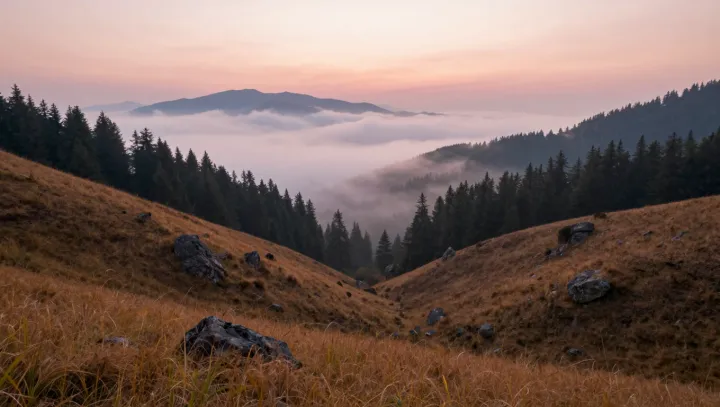
Fog sliding over a mountain ridge does more to the brain than offer a pretty view. It quietly steals oxygen from anxious inner monologue and hands it to systems tuned for wide, open attention. In neuroimaging work, that shift shows up as reduced activity in the default mode network, the circuit tied to self‑referential chatter and rumination.
The counterintuitive part is this: stillness in you often begins with motion out there. As the fog curls and reforms, the visual cortex tracks slow, continuous change, recruiting smooth pursuit eye movements and suppressing the jumpy saccades linked with scanning for threats, while the parietal cortex supports a broad, panoramic field of view instead of a narrow, target‑locking stare.
Calm, in this frame, is not a vague feeling but a measurable redistribution of neural resources. When attention anchors in gently shifting sensory input, functional connectivity tilts away from the default mode network toward task‑positive networks that support present‑moment processing, a pattern repeatedly documented in experienced mindfulness practitioners during open monitoring meditation.
Nature scenes are not passive backdrops; they act like low‑tech neurofeedback. The slow dynamics of fog offer high signal and low cognitive load, reducing demands on working memory while maintaining engagement, a combination that nudges autonomic balance toward parasympathetic dominance and aligns brain rhythms with the quieter signatures seen in seasoned meditators.