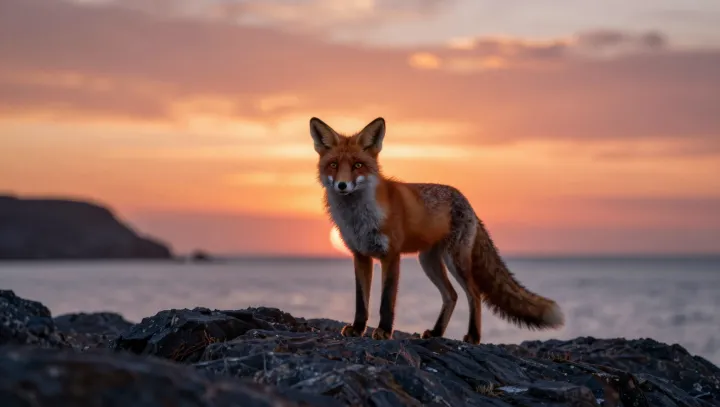
Cold, not predators, is the real opponent for this fox. Smaller than many housecats, its survival margin hangs on physics, not speed or strength. The animal carries one of the densest natural coats measured in a wild carnivore, with guard hairs and underfur trapping air like layered aerogel, sharply reducing thermal conductivity and slowing heat diffusion from core to skin.
Stillness becomes strategy, not weakness. By lying curled and motionless, the fox cuts convective heat loss to the wind and slashes energy expenditure from skeletal muscle activity, keeping basal metabolic rate just high enough to maintain core temperature. Every step it does not take means less oxygen consumption, less brown adipose tissue activation, and fewer calories burned in a habitat where food can vanish for long stretches.
Compact shape does the rest. Short legs, small ears and a rounded body shrink surface‑area‑to‑volume ratio, trimming the perimeter through which infrared radiation can escape. Instead of roaming constantly like a desperate endurance athlete, the fox behaves more like a careful accountant of joules, spending heat and motion only when the return in calories justifies the risk.