
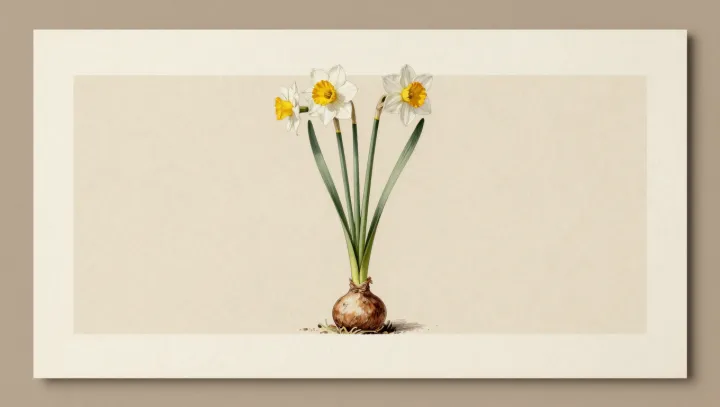
One blunt fact stands out first: the daffodil behaves like a plant accountant with zero tolerance for waste. Each bulb is a compact vault of starch and other carbohydrates, built in dense scales that sit just below the soil line, where temperature and moisture swings are muted and energy losses stay low.
The real surprise is how little of that reserve goes into the flower show itself. Most of the stored starch, mobilized through enzymatic hydrolysis and moved via phloem transport, is spent on pushing up leaves and rebuilding the bulb’s own tissues, not on the bright petals that draw attention. Those leaves, in turn, run high-output photosynthesis, paying back the bulb by converting light into fresh carbohydrates that refill the storage scales while the blooms already start to fade.
Equally stark is the rule the plant seems to enforce: cut the leaves early and the whole system takes a hit. Without a full photosynthetic phase, the basal plate and apical meristem inside the bulb cannot fully renew the next season’s shoots and flower primordia, even though the current bloom may look intact. What looks like a simple yellow flower is, in practice, a tight, recurring energy budget, where a single underground organ both bankrolls survival and underwrites the entire spring display.