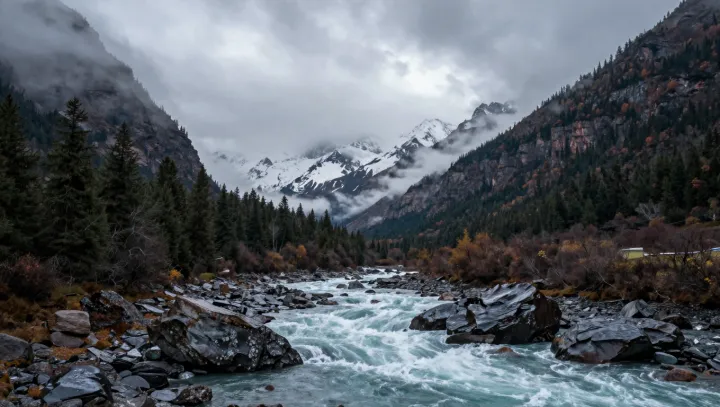
This frail river is not gentle at all. Under the blur of mist, water behaves like a cutting tool, and the tool gains force from gravity, channel slope, and discharge. Fluvial incision focuses stress on a narrow bed, where abrasion by sand and gravel, plus chemical weathering, removes rock grain by grain, while most of the mountain surface barely changes.
The real surprise sits in the feedback. As the channel cuts down, hydraulic radius and flow velocity rise, so shear stress on the bed increases rather than fades. That extra stress boosts sediment transport capacity and enlarges knickpoints, steep steps that migrate upstream as mobile shock fronts, deepening the valley while the river itself stays only tens of meters wide.
More radical still is how this thread of water can lock horns with tectonic uplift. Where uplift raises rock, the river steepens, raising stream power until erosion rate matches uplift rate, a dynamic equilibrium described by the stream power law. Carved ever deeper, the gorge undercuts slopes, triggers landslides, and exports debris to distant basins, quietly rewriting the form of the entire range.