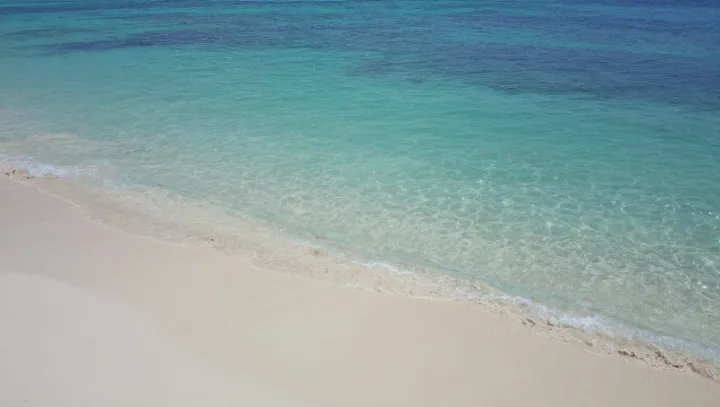

A flat horizon does more than please the eye. Neuroimaging work shows that viewing calm water and an unbroken sea–sky line reduces activation in the amygdala and hypothalamus, core hubs of the stress response axis. No breathing exercise. No posture change. Just photons from a muted blue scene hitting the retina and cascading through the visual cortex toward circuits that regulate arousal and vigilance.
The sharper claim from researchers is that such views do not merely relax; they reallocate resources. As low‑frequency, predictable motion in waves reaches area MT and higher visual areas, autonomic markers such as heart rate variability and skin conductance shift toward a parasympathetic profile, while electroencephalography shows increased alpha power over occipital and parietal regions, a signature linked to reduced sensory noise and improved signal selection. In this state, the default mode network quiets and the frontoparietal attention network gains relative dominance, supporting sustained focus on a chosen target without subjective effort.
Counter to the idea that stress relief must be effortful comes an even starker finding. When participants passively watch high‑definition coastal footage, without instructions to relax, reaction‑time tests reveal faster performance and fewer lapses compared with urban or indoor scenes, and functional connectivity analysis points to tighter coupling between dorsolateral prefrontal cortex and posterior parietal cortex. The brain, faced with spatial simplicity, low threat probability, and rich but ordered visual input, appears to shift into an energy‑efficient surveillance mode that dials down alarm signals while sharpening the spotlight of attention.