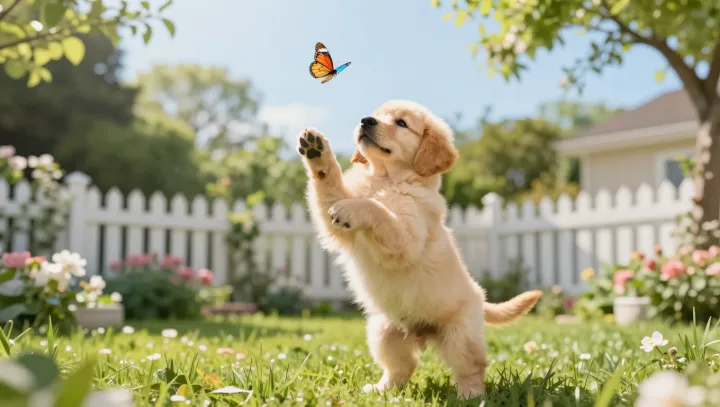

Glassy water often scares better than waves. At a calm shore, a golden retriever bred for water work can still halt, reading the lake as a confusing surface instead of a safe volume. Ethologists point out that puppies are not born with calibrated stereopsis or accurate size constancy; those visual computations mature only through repeated, low‑risk trials at puddles and shallow edges.
Hesitation, then, is not cowardice but quality control. The puppy’s brain is trying to reconcile mirror‑like reflection with binocular depth cues, while the vestibulo‑ocular reflex and proprioceptive feedback demand proof that the surface will hold a moving body. Ripples or splashes inject motion parallax, clarifying distance, yet a still lake with sharp reflections offers few dynamic cues, so the animal pauses, sniffs, paws, and watches thrown sticks before committing.
What looks like a quirky personality trait is closer to a live calibration protocol. Neural circuits in the visual cortex and cerebellum gradually align information about luminance, refraction, and body position into a stable internal model of water. Only once that internal model fits the evidence at the shoreline does the classic, confident retriever leap finally appear.