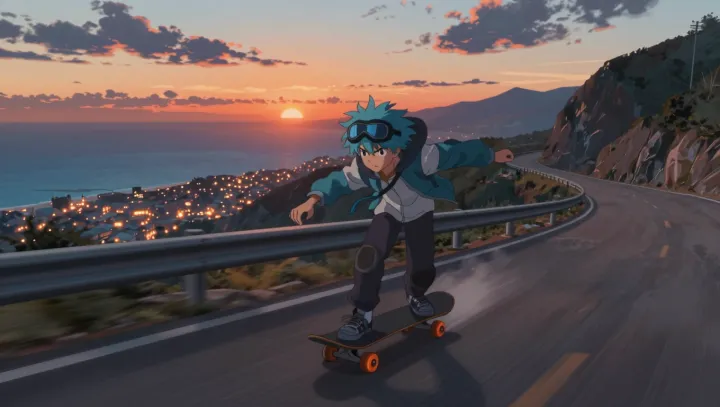
A cliffside curve does not care that a skateboarder is a child; physics sets the terms and the brain signs the contract in milliseconds. Tilt, speed and road camber are sampled first by the inner ear’s vestibular system, where semicircular canals and otolith organs convert angular acceleration and linear pull into spikes of electrical activity rushing toward the brainstem.
The harsh truth is that balance is mostly prediction, not reaction. Deep inside, the cerebellum runs an internal forward model, fusing vestibular input, visual motion, and proprioception from ankle and hip joint receptors to forecast where the board and body will be a blink from now, then pre‑biases muscle activity to meet that future instead of the present.
Control, though, is delegated. Spinal cord reflex arcs and vestibulospinal tracts adjust calf and core muscles in tens of milliseconds, long before conscious awareness can intervene, while cortical motor areas send slower, higher‑level corrections that fine‑tune the lean angle to match the squared relationship between speed and turning radius.
The unsettling part is that the kid feels flow, not calculus. Under that smooth carve, neural circuits continuously estimate center of mass relative to the board’s contact patch, update an internal model of friction and slope with each micro‑wobble, and cut motor commands the instant predicted fall direction breaches a narrow safety margin.