
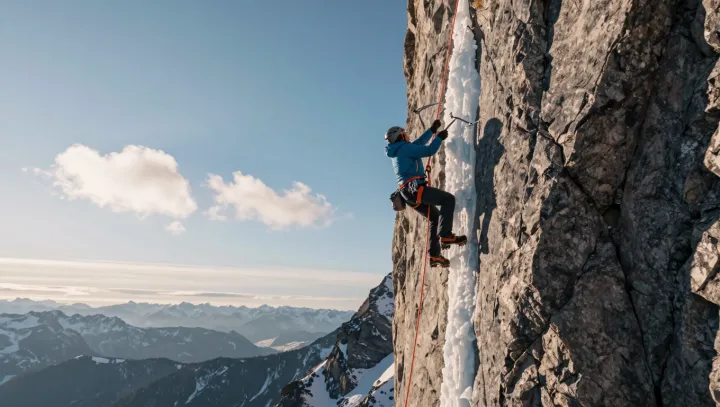
Bare fingers are overrated; steel wins. On near-smooth winter rock, security starts with concentrating force into tiny contact patches, so crampon frontpoints and ice tool picks act like mechanical amplifiers, turning a vague ripple in stone into a usable purchase.
What looks blank to skin is busy at the scale that matters, and climbers exploit that hidden structure. Frontpoints load the rock with high pressure, so even a millimetre-wide edge bites through rime and grit, while the downward alignment of body weight keeps the force mostly normal to the surface, boosting static friction instead of peeling the climber outward.
The real trick is geometry, not brute strength. Modern picks use a tapered, down-turned profile and aggressive teeth spacing; that shape lets them slot into tiny constrictions and oppose motion through a mix of frictional resistance and micro-interlocking, a combination that rock mechanics describes with contact stress and shear failure rather than any romantic idea of grip.
Balance, though, is the quiet hero. With feet frontpointing on barely-there edges and tools placed in shallow seams or constrictions, climbers keep hips close, reduce torque on each placement, and rely on static body positions instead of dynamic pulls, so those steel tips stay loaded in a predictable, almost boring way that keeps falls rare.