
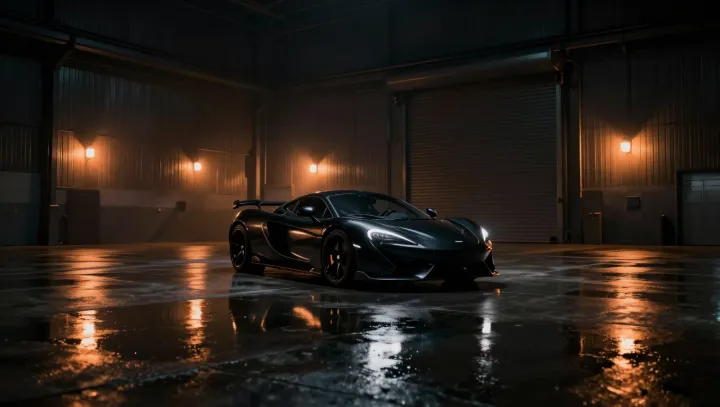
Concrete floors sell fantasy more effectively than any coastal highway. The stripped warehouse, with its low sodium glow and echoing emptiness, acts as a psychological amplifier, turning a car that is already extreme into something that feels forbidden, almost weaponised, because the setting strips away all cues of normal civic life and leaves only metal, shadow and threat.
This aesthetic is not accidental. Visual studies show that people rate objects as more powerful when framed against large, hostile spaces, and industrial architecture is the most accessible stand in for that hostility. Exposed girders, fire doors and loading bays hint at weight limits, impact resistance and occupational hazard signage, all of which whisper that this machine belongs closer to heavy machinery than to family transport, even when it shares the same public road network.
The deeper trick is neurological. Human threat detection runs through the amygdala and is highly sensitive to enclosed, low light environments associated with mechanical risk and injury, yet the prefrontal cortex rebrands that arousal as status when a glossy badge and price tag enter the frame. Advertising for hypercars leans on this misfire: by placing a low slung body in a cavernous depot, it splices the visual grammar of the factory floor with the promise of private ownership, so danger is not removed but domesticated, parked like a trophy inside a concrete cage.