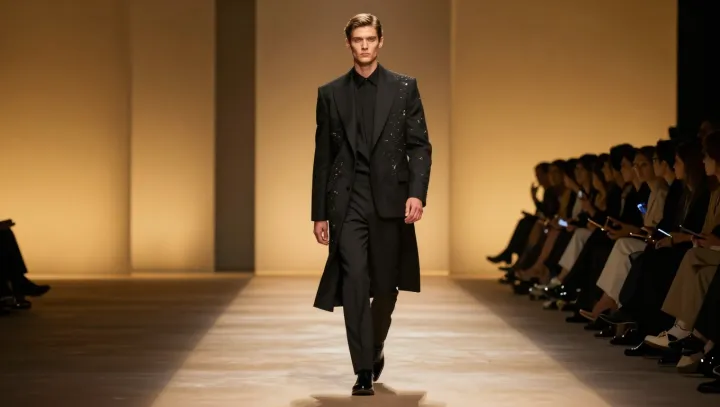

A quiet outfit often speaks louder than a loud one. Against expectation, a plain knit, clean trousers and minimal sneakers tend to upgrade you in the minds of strangers before any greeting passes your lips. Studies on first impressions show observers form judgments within seconds, leaning heavily on visual heuristics and cognitive shortcuts rather than on nuanced personality cues.
The blunt truth is that simplicity reads as processing ease. When clothing is low on pattern, branding and contrast, the visual cortex and prefrontal cortex have less work to do; the look is parsed quickly, and that fluency spills over into social judgments, a well documented “fluency effect” in social cognition research. People unconsciously map that ease onto you, tagging you as efficient, self-controlled and therefore more competent.
Minimal outfits also piggyback on status signaling. Experiments on “stealth wealth” show that unbranded, understated garments are read as a signal of confidence and resources, while noisy logos and hyper-styling skew toward lower perceived authority. A simple, well-fitted knit hints that you dress for function, not for validation. That restraint, before a single word is spoken, frames everything you say as more likely to matter.